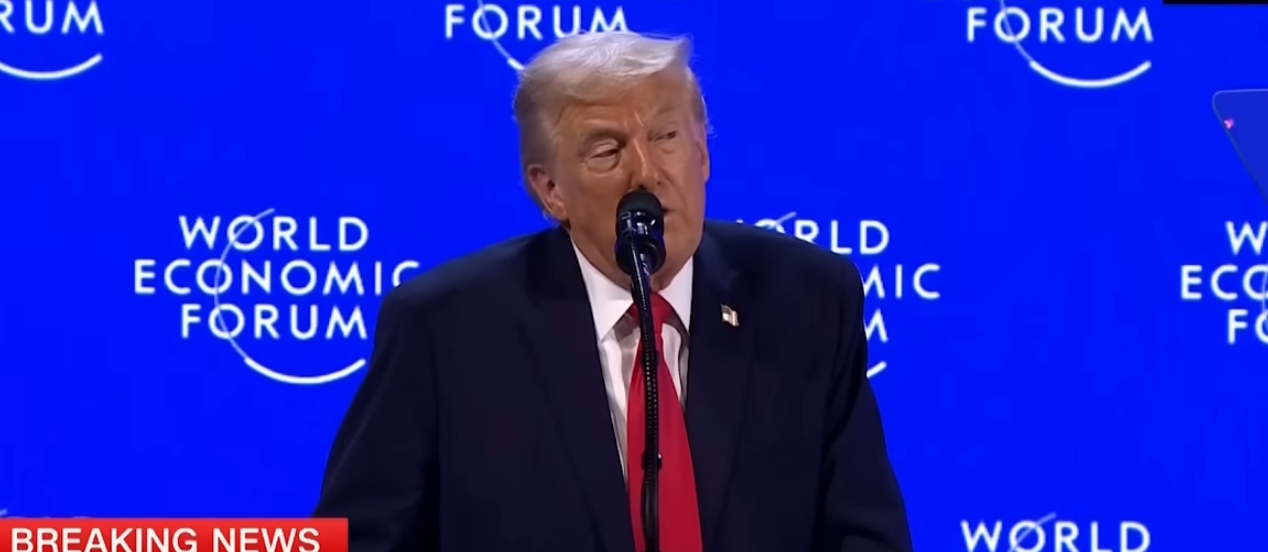
Psychologists believe that President Donald Trump may be showing signs of dementia, pointing to his increasingly chaotic and lengthy speeches as a possible symptom of logorrhea—a condition in which a person speaks compulsively and has difficulty staying on topic.
Such speculation has intensified following a series of recent speeches and public addresses in which, according to some observers, the 79-year-old president appears to lose track of his own thoughts, drift into unusual side stories, and occasionally confuse basic facts, reports the Daily Mail.
Critics claim it is becoming harder to ignore what they describe as frequent “moments of senility”—interruptions in the flow of thought, sudden shifts to unrelated topics, and mixing up names. Some go further, suggesting that apparent memory lapses, language difficulties, poorer judgment, and increased irritability could resemble early warning signs of dementia. One symptom that is particularly emphasized is logorrhea.
Logorrhea is a speech disorder characterized by unstoppable, excessive talking that can be exhausting to follow—not only because the person speaks a lot, but also because their thoughts jump mid-sentence, return to points already mentioned, or veer off in unexpected directions, reports Index.hr.
Experts note that this can manifest as long answers that never reach a clear point, sudden topic changes, and difficulty stopping speech even when the interlocutor tries to take over. Speech therapists also warn that people with logorrhea may dominate conversations, interrupt others, or fail to recognize cues that someone else wants to speak.
Some commentators speculate that Trump displays patterns reminiscent of logorrhea, which in certain cases can appear as a symptom of a broader issue, such as cognitive impairment.
In addition to dementia and other neurological conditions, logorrhea is also mentioned in the context of certain psychiatric disorders, such as mania—a state of elevated energy and accelerated thinking associated with bipolar disorder.
Trump’s supporters reject such claims, emphasizing that this is simply his recognizable style and that no physician who has examined him has diagnosed a cognitive disorder. Trump himself has repeatedly stated that he is in “perfect health,” which he attributes to “good genes,” and has boasted that he “aced” a cognitive test.
Critics, however, point out that such tests often involve basic tasks—such as drawing a clock, identifying animals, or memorizing a short list of words. Doctors warn that long speeches alone are not proof of dementia, but add that sudden and noticeable changes in behavior—especially if speech becomes more disorganized, concentration shorter, and memory weaker—can be cause for additional concern.
Assessment of logorrhea typically involves evaluation by a speech therapist or mental health professional, who observe communication patterns and overall cognitive functioning. In some cases, additional tests are conducted, including brain imaging, to rule out neurological causes.
Treatment is usually focused on the symptom and the underlying cause: it may include speech therapy, psychological support (such as cognitive behavioral therapy), and, when necessary, medication—especially if excessive speech is linked to bipolar disorder or schizophrenia. For dementia, however, there is still no cure, and as the disease progresses, language difficulties may become more pronounced.
Trump previously stated that he underwent a CT scan, and his doctor, Captain Sean Barbabella, reportedly confirmed that the goal was to “definitively rule out cardiovascular problems” and that the scan showed no abnormalities.
According to reports, the president has also had chronic venous insufficiency—a common condition in older age in which damaged valves cause blood to pool in the legs—and reportedly takes aspirin, which has a blood-thinning effect, to help manage the condition. High blood pressure, as a risk factor for vascular problems, is also associated with an increased risk of dementia in older age.
Foto: Screenshot_31-1-2026_20573_www.google.com – CNN