

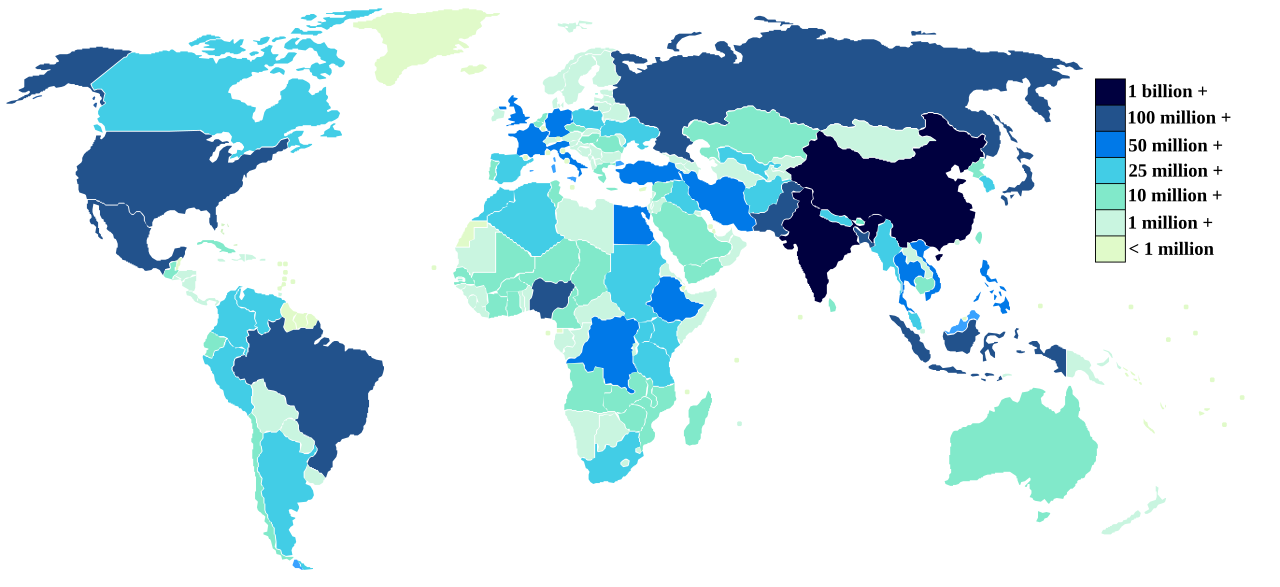
In recent years, China has been recording a population decline for the fourth consecutive year, and forecasts indicate that this trend will continue in the future.
According to official data, in 2024 the country’s population decreased by 3.39 million to 1.405 billion, which is a faster decline than in 2023. At the same time, the total number of births fell to 7.92 million in 2025, down from 10.7 million in 2024. China’s birth rate has dropped to 6.53 per 1,000 people.
According to China’s demographic authorities, they expect that easing marriage restrictions—allowing couples to marry anywhere in the country and not only in their place of residence—will likely lead to a temporary increase in the birth rate.
Chinese authorities are trying to promote “positive attitudes toward marriage and having children” in order to mitigate the consequences of the one-child policy that was in force from 1980 to 2015. While the policy helped fight poverty and control population growth, it left Chinese families smaller. Migration from rural areas to cities, where children tend to gather in one place and where the cost of raising children is higher, has also contributed to a decline in fertility. In many parts of the world, including China, the replacement fertility rate of 2.1 children per woman has not been reached. East and Southeast Asian countries, including Taiwan, South Korea, and Singapore, also have very low fertility rates, often below 1.1 children per woman.
India has for some time now overtaken China as the world’s most populous country. Over the past two years, India’s population has increased by nearly 50 million people. According to the latest Worldometer data, India has 1,463,865,525 inhabitants, while China has 1,416,096,094. The difference continues to grow, as India recorded nearly 30 million more births than deaths, while China recorded a natural population decrease. It should be noted that India does not conduct a population census as frequently as many developed countries, so the data are estimates. In India, there are also tribes such as the Sentinelese on North Sentinel Island in the Andaman and Nicobar Islands, who live in isolation from modern society and are not included in census data in order to protect their way of life. India is therefore partly a demographic mystery, and the true population figure may differ from official estimates.
The countries that follow with significantly smaller populations and truly “compete” with India and China are the United States and Indonesia. The United States has 342,757,807 inhabitants, while Indonesia has 285,721,236. They are followed by Pakistan (255,219,554), Nigeria (237,527,782), Brazil (212,812,405), Bangladesh (175,686,989), Russia (143,997,393), Ethiopia (135,472,051), Mexico (131,946,900), Japan (123,103,479), Egypt (118,365,995), the Philippines (116,786,962), DR Congo (112,832,473), and then Tanzania with 100 million inhabitants, concluding the list of the world’s 15 most populous countries.
Compared to the period immediately after World War II, it is noticeable that poor Third World countries experienced a massive demographic boom, while Western countries—particularly in Europe—such as Germany, France, and the United Kingdom remained at relatively stable levels over time. Croatia, according to Worldometer’s estimates, has a population of 3,832,978, which is 0.047% of the world’s population. Demographic aging and the current population decline are problems faced by most countries of the Western Hemisphere, resulting in numerous social and economic challenges.
Prepared by: Ivica Buljan
Foto: Wikimedia/ Creative Commons Attribution-Share Alike 3.0 Unported – CC-BY-SA-3.0